Digital twin and agentic AI for energy efficiency
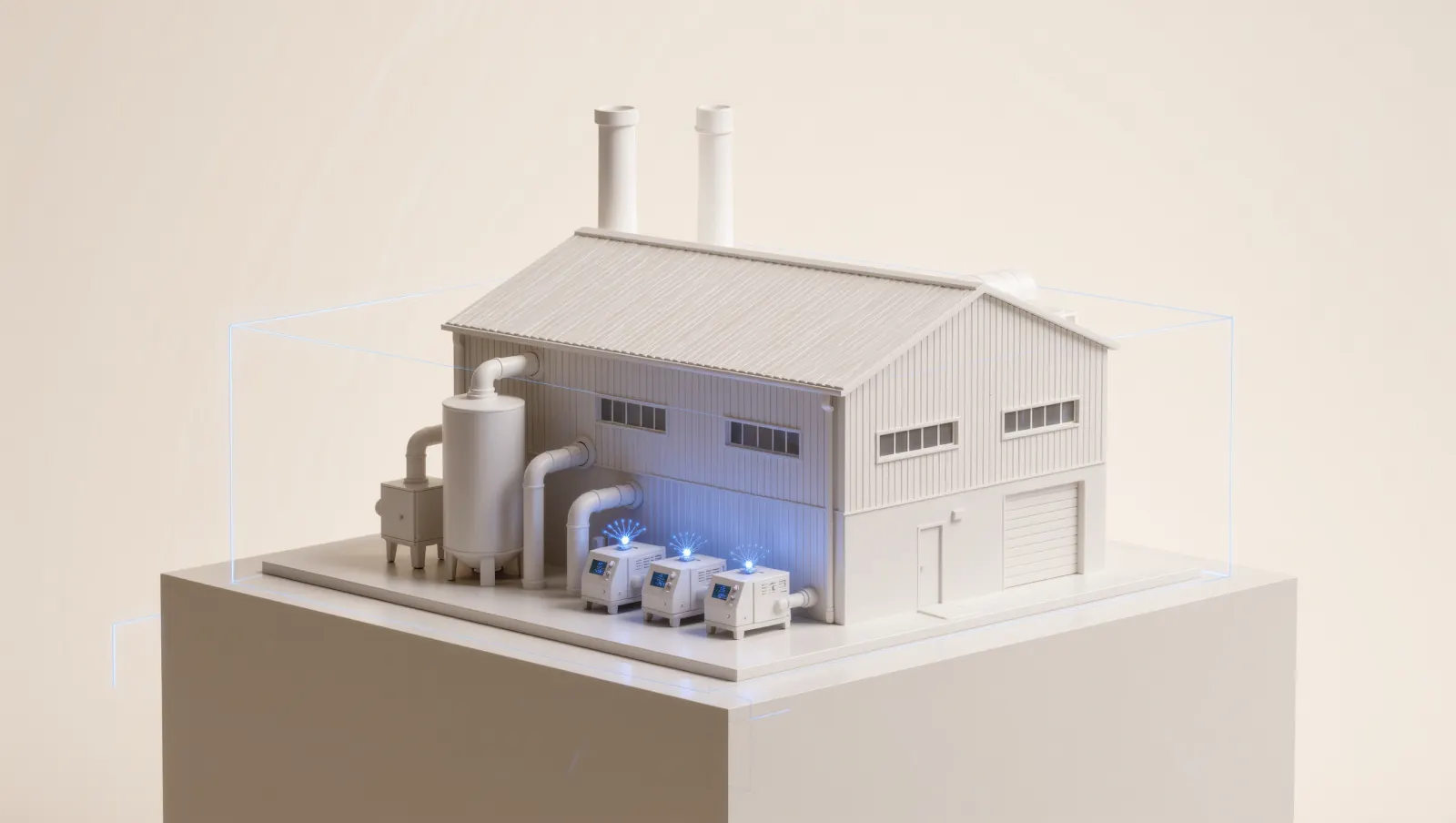
A platform that connects field devices, shows where and when energy is used on a digital twin of the plant, and answers technicians’ questions by combining data and documentation.
Energy, IoT and AI
- Method
- Operator interviews before design
- AI
- Verifiable answers, always with a source
- Data
- Stays in the client’s cloud account
The challenge
The data existed, but it was scattered across meters, sensors and technical manuals. Operators only saw where energy was wasted at the end of the month, and finding anything in the documentation took hours. The client wanted AI that is genuinely useful, not a demo chatbot.
How we worked
- Discovery through interviews with technicians and plant managers: the questions they ask every day became the assistant’s backlog.
- Incremental releases every two weeks on a pilot plant, with adoption metrics measured before rolling out to other sites.
- A set of test questions with expected answers, used as an automated check on every change to the AI.
- Operator training and a direct support channel during the first weeks of use.
Architecture and choices
- The real-time data path is separate from long-term storage, so a slow archive never delays the dashboards.
- The digital twin as a reading layer: every sensor is linked to its asset, so an anomaly shows up at the exact point in the plant where it happens.
- An agentic assistant that picks the right tool (time series, documentation or both) through typed functions instead of free-form generated queries.
- Every answer cites the data or document it comes from, so it can be checked.
External services, and why these
Devices
AWS IoT Core
Per-device certificates and managed routing rules, in the cloud the client already used.
Chosen over: Self-managed MQTT broker, Azure IoT Hub
Semantic search
pgvector
One less database to run: vectors and relational data in the same PostgreSQL.
Chosen over: Pinecone, Weaviate
AI models
Amazon Bedrock
Models run in an EU region under the existing cloud contract, without sending data to new vendors.
Chosen over: Direct vendor APIs
Outcome
In use on the pilot plant, with rollout to other sites under way. The client is covered by a confidentiality agreement.
Stack
- AWS IoT Core
- MQTT
- AWS Lambda
- PostgreSQL
- pgvector
- Amazon Bedrock
- Python
- React
- Three.js